Most maples have opposite, palmately lobed leaves and seeds in joined pairs of wings.
Identifying maple
Scientific name: Acer
How to recognise it
- Leaves and twigs are opposite.
- Most leaves are palmately lobed, with several main veins fanning from the base.
- The fruit is a pair of winged seeds, a double samara.
- Fall colour ranges from yellow to deep red.
Five common maples
- Sugar maple (Acer saccharum): five lobes with few teeth and smooth rounded gaps; the source of maple syrup; fall colour gold, orange and red.
- Red maple (A. rubrum): toothed lobes, red twigs and buds, red flowers in early spring; scarlet in autumn.
- Silver maple (A. saccharinum): deeply cut leaves, silvery beneath; early flowers; seeds that ripen in spring.
- Norway maple (A. platanoides): introduced from Europe; broken leaf stalks ooze milky sap; widely planted in streets.
- Boxelder (A. negundo): compound leaves of three to seven leaflets; see the boxelder page.
Exceptions and look-alikes
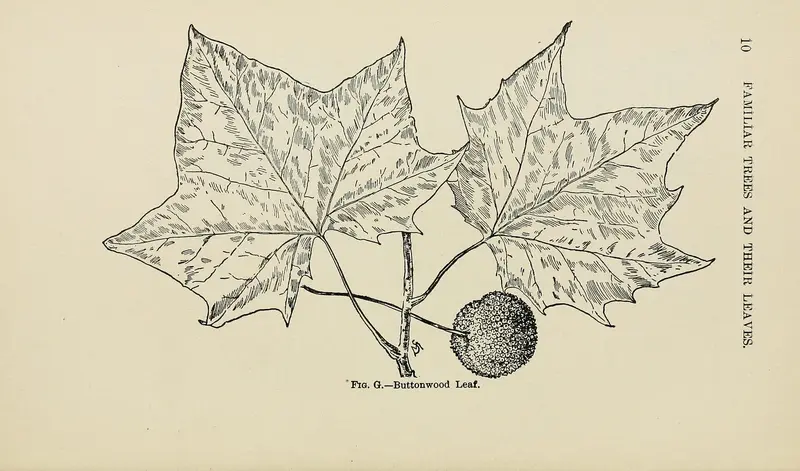
Boxelder is a maple with compound leaves, so check the opposite arrangement. Sweetgum and sycamore have lobed leaves that look maple-like but are alternate. Hawthorn and some currants have lobed leaves too, but are not opposite. The leaf stalk of Norway maple oozes a milky sap when broken.
Maple syrup
Sugar maple is the main source of maple syrup, which is made by boiling sap collected in late winter and early spring when nights freeze and days thaw. Red and black maples can also be tapped. It takes about 40 litres of sap to make a litre of syrup.
Maples in Britain
The native field maple (Acer campestre) has small, five-lobed leaves with rounded lobes. Sycamore (A. pseudoplatanus) is a large maple that was introduced to Britain, with big five-lobed leaves and long chains of winged seeds.