Every way of reading a tree
Each page covers one feature, one group of trees, or one question about trees, in plain words. Start with the key if you have a tree in front of you.
By feature
- The key: what tree is this?Start from a leaf, bark, fruit or twig, with pictures at each step
- Common treesPick a leaf shape, bark or fruit and see the matching trees
- SeasonsWhat is in flower, fruit or autumn colour in each month
- LeavesSimple or compound, opposite or alternate, edge and shape
- Leaf shapesA picture guide to leaf outlines, edges and arrangement
- Needles and conesBundles, single needles, scales, and what the cones do
- BarkSmooth, ridged, scaly, peeling, shaggy
- Bark textureRidges, plates, scales, strips and peels, with examples
- Bark colourPale, dark, red-brown and mottled, and why colour is unreliable
- How bark changes with ageFrom smooth sapling bark to the ridges of an old tree
- Fruit, seeds and flowersAcorns, samaras, nuts, drupes and catkins
- Buds and twigsWinter identification from a bare branch
- Shape and sizeCrown outline, trunk and where the tree grows
- PalmsFan or feather fronds on an unbranched trunk
- Young trees and saplingsWhen there is no bark or fruit to go on
- ShrubsTelling a shrub from a small tree, and naming one by its leaf
- Fruit treesApple, pear, cherry, plum and peach: blossom, leaf and fruit
By tree
- OakAcorns, and leaves that are usually lobed
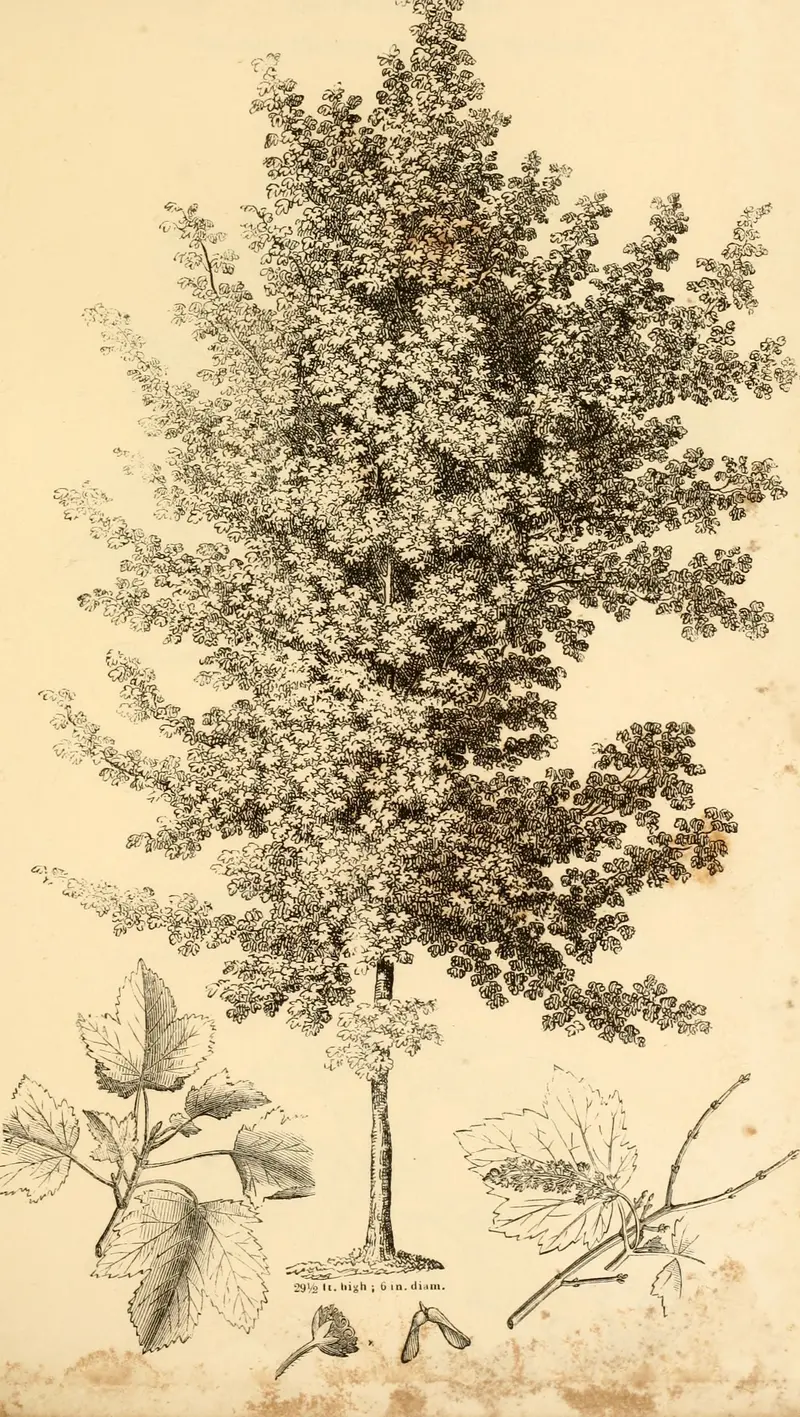
- MapleOpposite leaves and paired winged seeds
- BoxelderA maple with compound leaves
- ElmLopsided leaf base and double-toothed edge
- AshOpposite compound leaves and single-winged seeds
- HickoryAlternate compound leaves, solid pith and nuts in a husk
- WalnutAlternate compound leaves, chambered pith and round green husks
- BirchPale peeling bark, double-toothed leaves and catkins
- Aspen and cottonwoodTrembling leaves on flat stalks, and pale bark
- PineNeedles in bundles of two to five
- SpruceSingle, stiff, four-sided needles on woody pegs
- Fir, hemlock and yewFlat single needles, and cones that stand or hang
- Douglas-firNot a fir: hanging cones with three-pointed bracts
- LarchNeedles in tufts, and a conifer that drops them
- Cedars and junipersScale leaves, and a word used for many trees
- JuniperSharp needles or scales, and blue berry-like cones
- Other common broadleaf treesTulip tree, sweetgum, sycamore, cherry, dogwood, redbud, locust, beech and more
About trees
- DendrologyThe study of trees, and how they are named
- What is a tree?Wood, height, a single trunk, and where the definition gets fuzzy
- The evolution of treesFrom the first forests to oaks and pines
- Why different trees grow in different placesClimate, soil and the shape of the land
- Why leaves are the shape they areLight, water, wind and what the shape does for the tree
- The benefits of treesShade, water, air, habitat and why they are worth knowing
- Identifying tree health problemsWhat damage looks like, and who to ask
- Endangered trees in AmericaTrees that disease, pests and climate have pushed to the brink
- Christmas treesTelling the firs, spruces and pines on the lot apart
- A kids' guide to tree identificationFour easy games to learn trees, for children and the grown-ups with them
- GlossaryThe botanical words used here, in plain English